STEM & Science Personalized Children's Books
Where your child becomes the scientist, inventor, and hero of their own discovery journey.
Ignite your child's natural curiosity with personalized STEM and science experiment books from Leo Books. Every story transforms your little one into a confident young scientist, creative inventor, or determined problem-solver who discovers that asking questions and trying again are the keys to amazing discoveries. With their name, photo, and unique personality woven into each page, children become the hero of hands-on adventures where experimentation, observation, and teamwork lead to exciting breakthroughs.
Show moreShow less
Our STEM-themed personalized books strike the perfect balance between engaging storytelling and age-appropriate scientific concepts. From volcanoes that need coaxing to bubble solutions that create magic, from bridges requiring clever engineering to magnets revealing invisible forces, each story introduces fundamental scientific thinking through narratives that captivate young minds. Children learn that science isn't about getting everything right the first time—it's about curiosity, careful observation, creative thinking, and the courage to try different approaches until you find what works.
Perfect for curious toddlers through budding elementary-aged scientists, Leo Books' STEM adventures emphasize safe, age-appropriate experiments that parents can feel good about. Each personalized science book celebrates your child's questions and ideas while introducing concepts like cause and effect, hypothesis testing, trial and error, measurement, observation, and collaborative problem-solving. These stories show science as an exciting, accessible adventure where mistakes are valuable learning opportunities and every child has what it takes to make discoveries.
Choose Your Adventure
Every story personalized with your child as the hero.
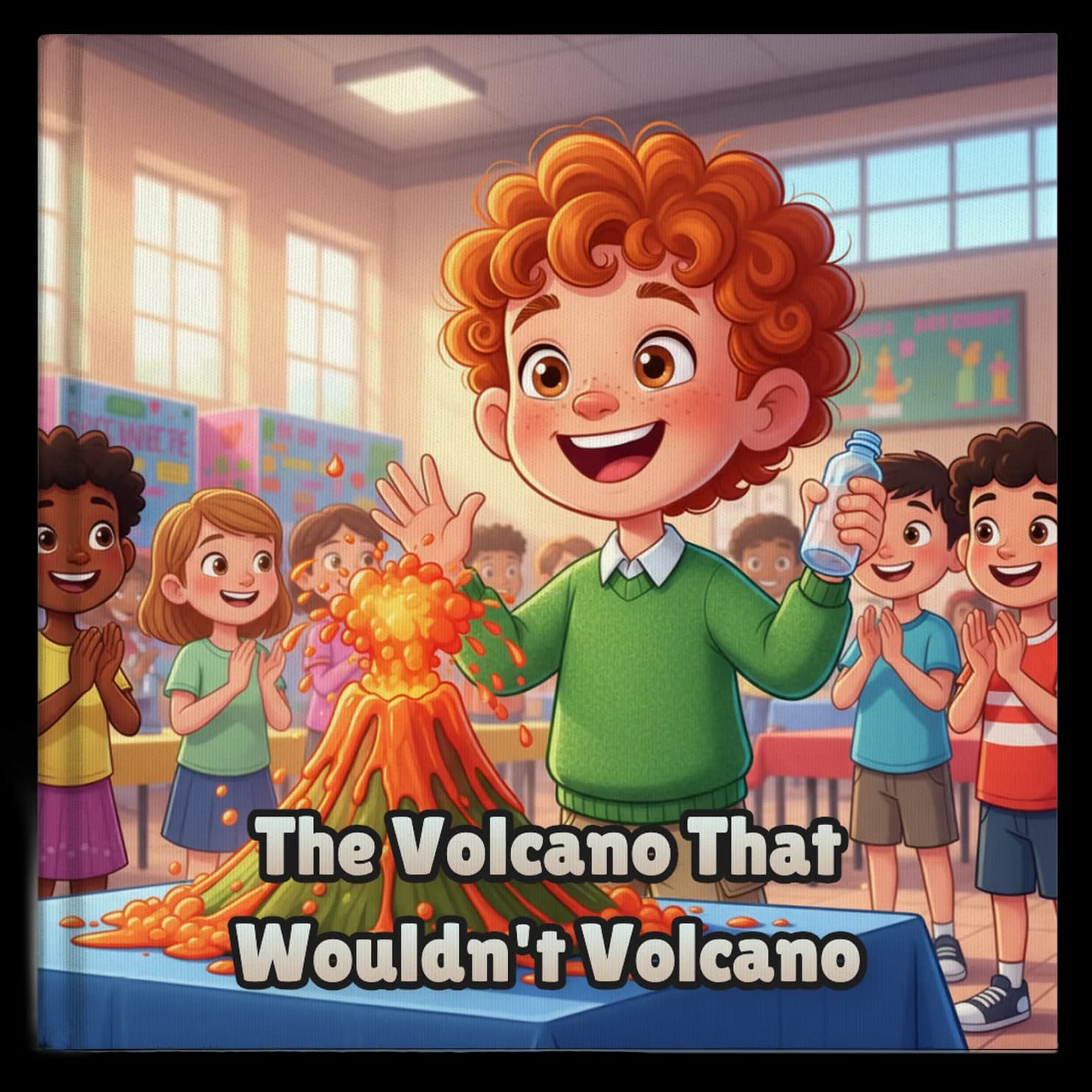
The Volcano That Wouldn't Volcano
Use scientific observation and creative problem-solving to help a stubborn model volcano finally erupt spectacularly.
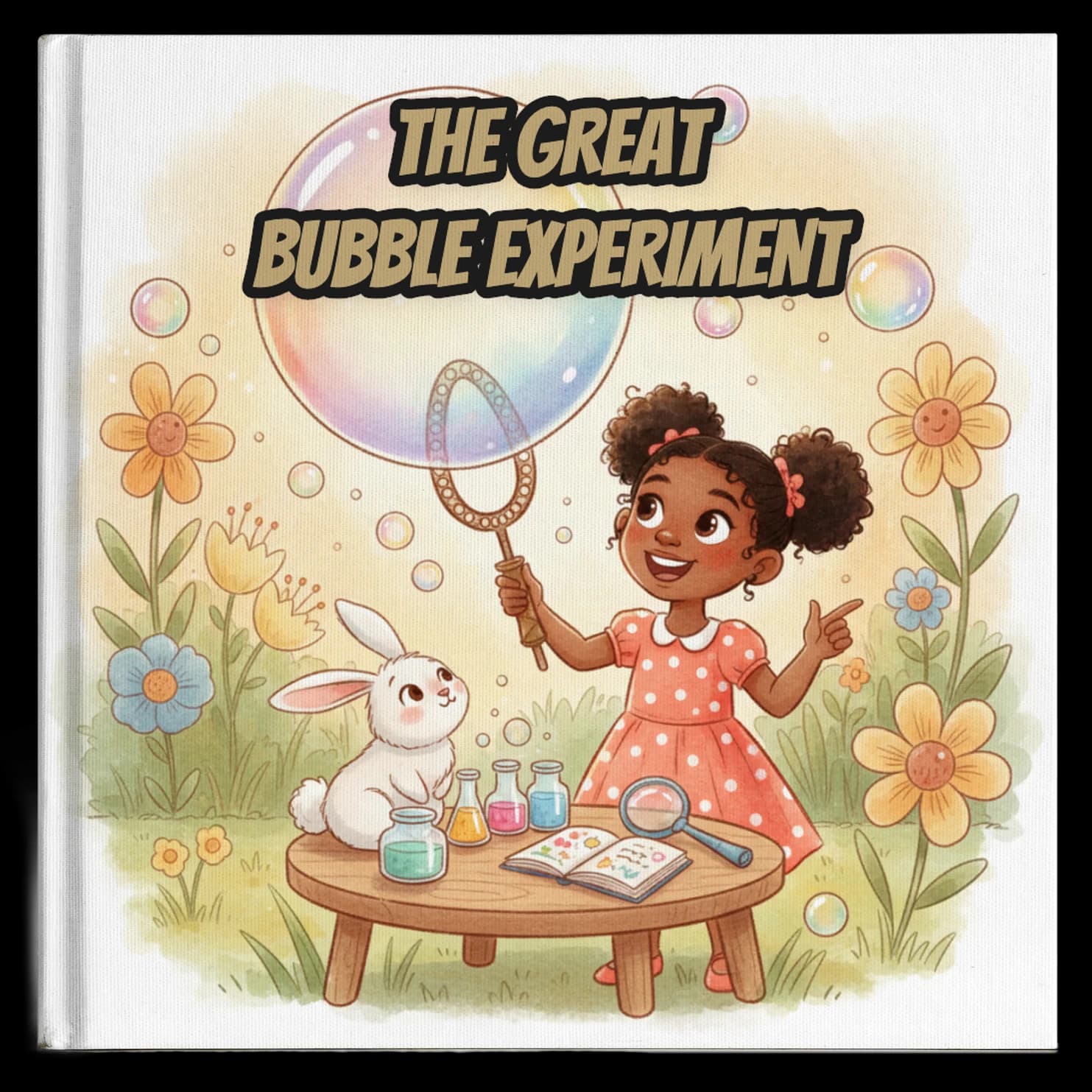
The Great Bubble Experiment
Discover the science behind bubbles while testing different recipes to create the biggest, strongest, most amazing bubbles ever.
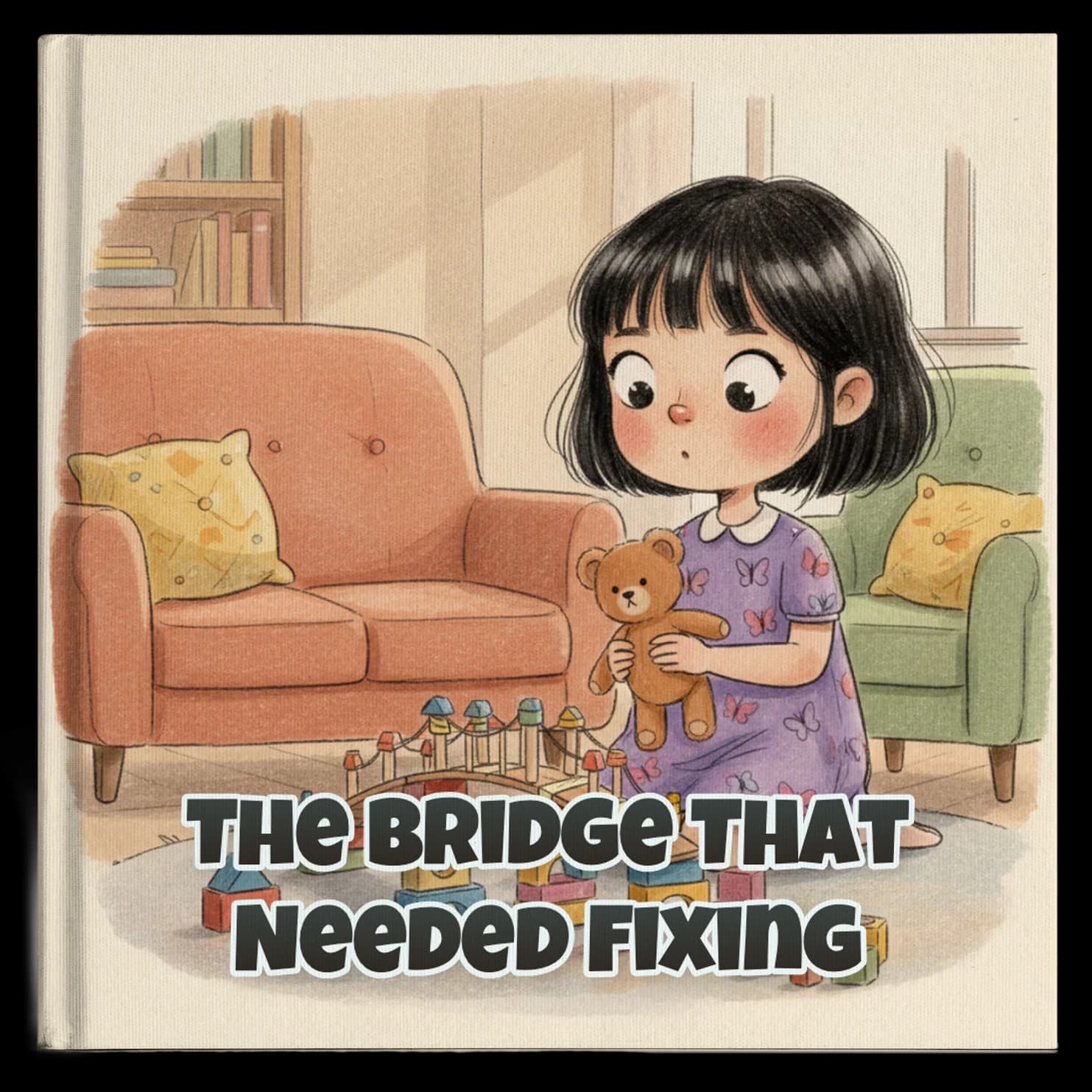
The Bridge That Needed Fixing
Apply engineering principles and creative thinking to design and build a strong bridge that solves a community problem.
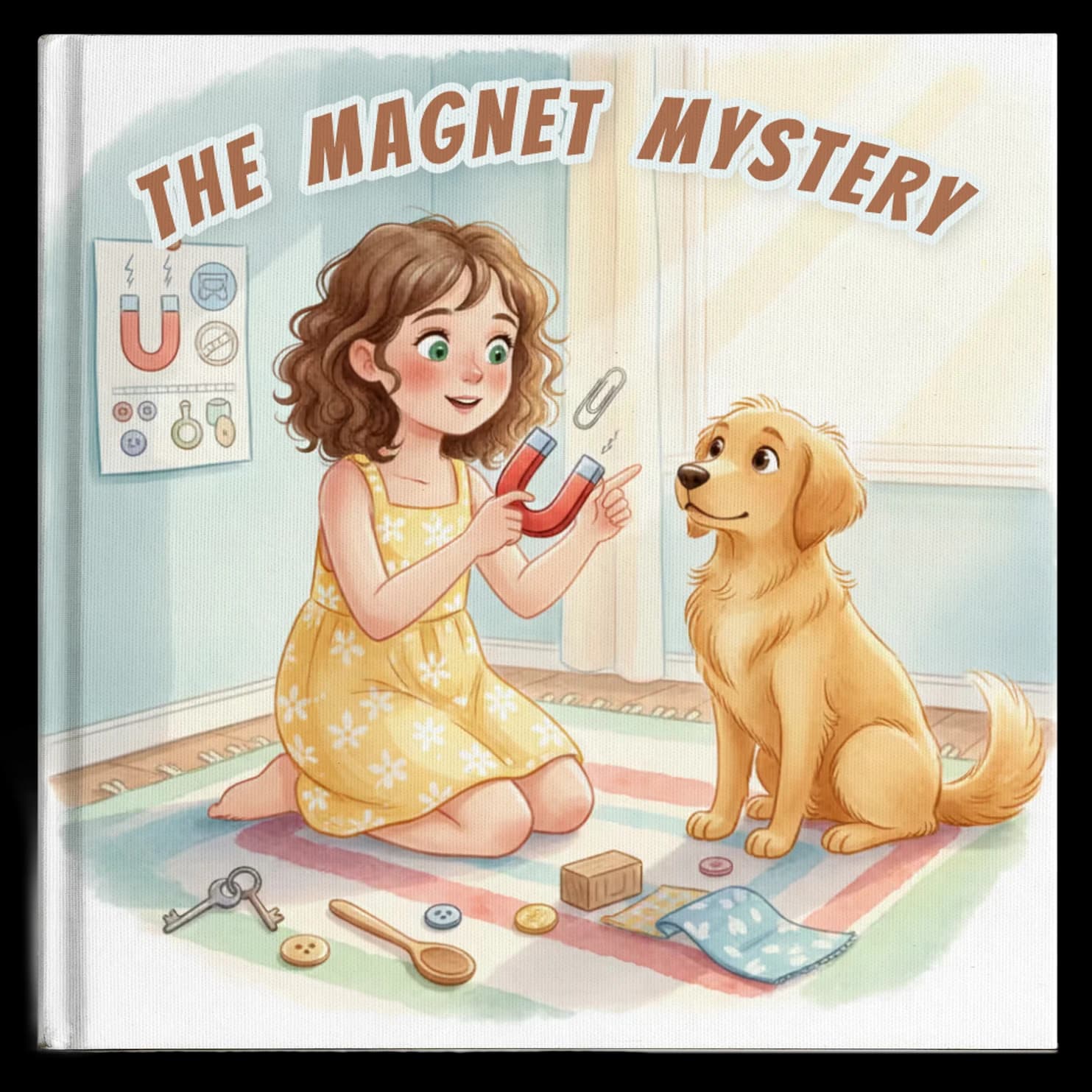
The Magnet Mystery
Investigate the invisible forces of magnetism through experiments that reveal which objects attract and why magnets work.
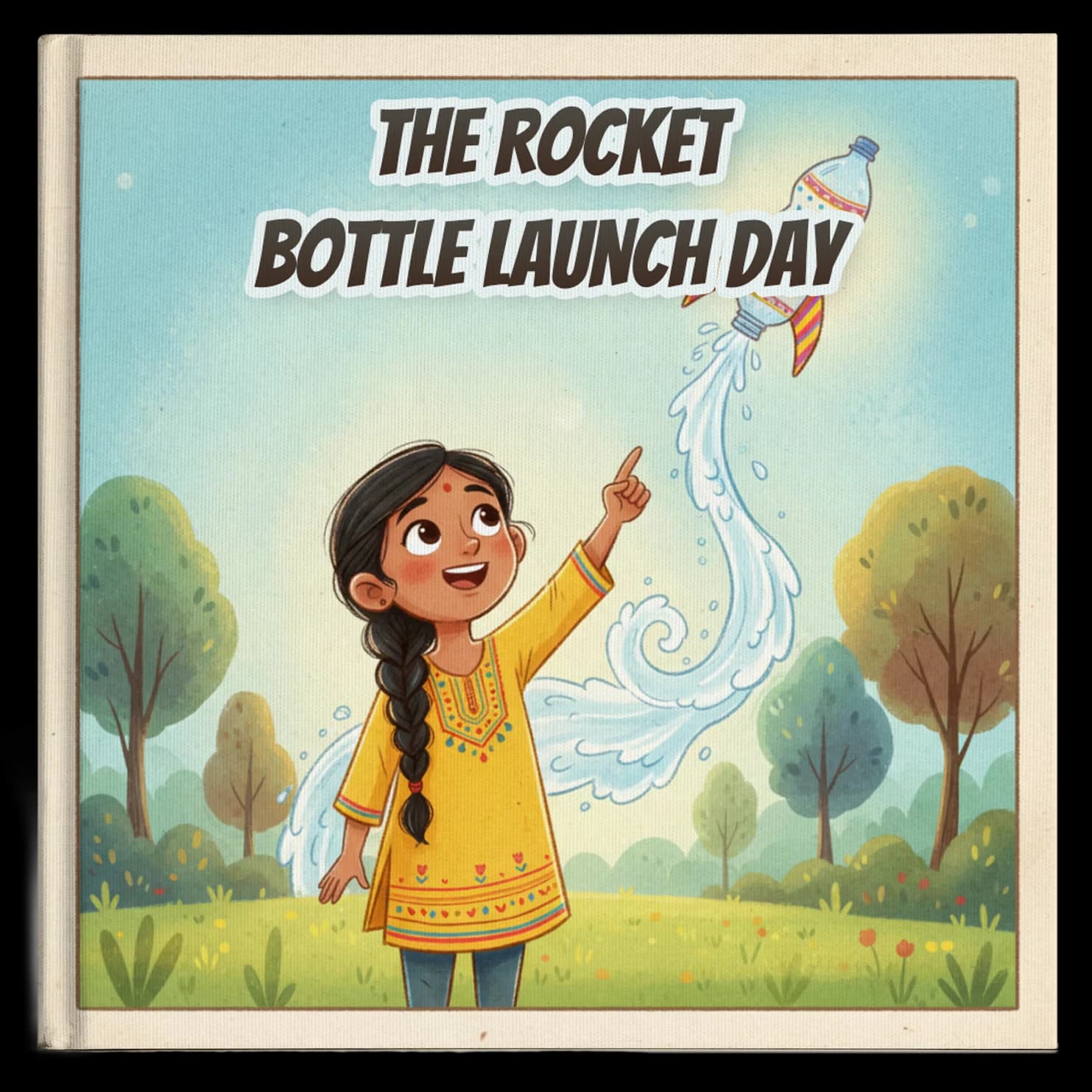
The Rocket Bottle Launch Day
Build and launch a water bottle rocket, learning about air pressure, trajectory, and aerospace engineering.
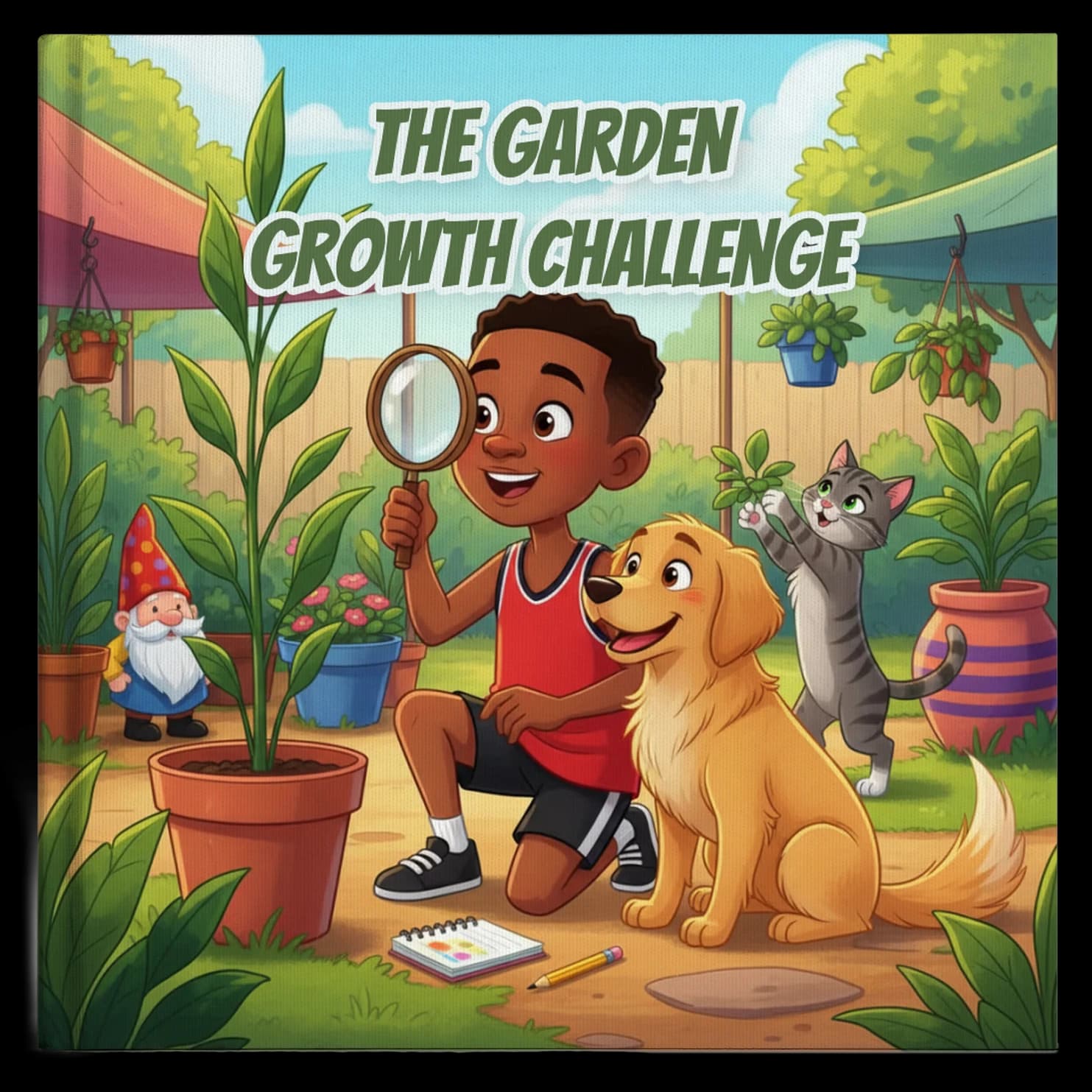
The Garden Growth Challenge
Design and conduct a plant growth experiment, learning about variables, observation, and what living things need to thrive.
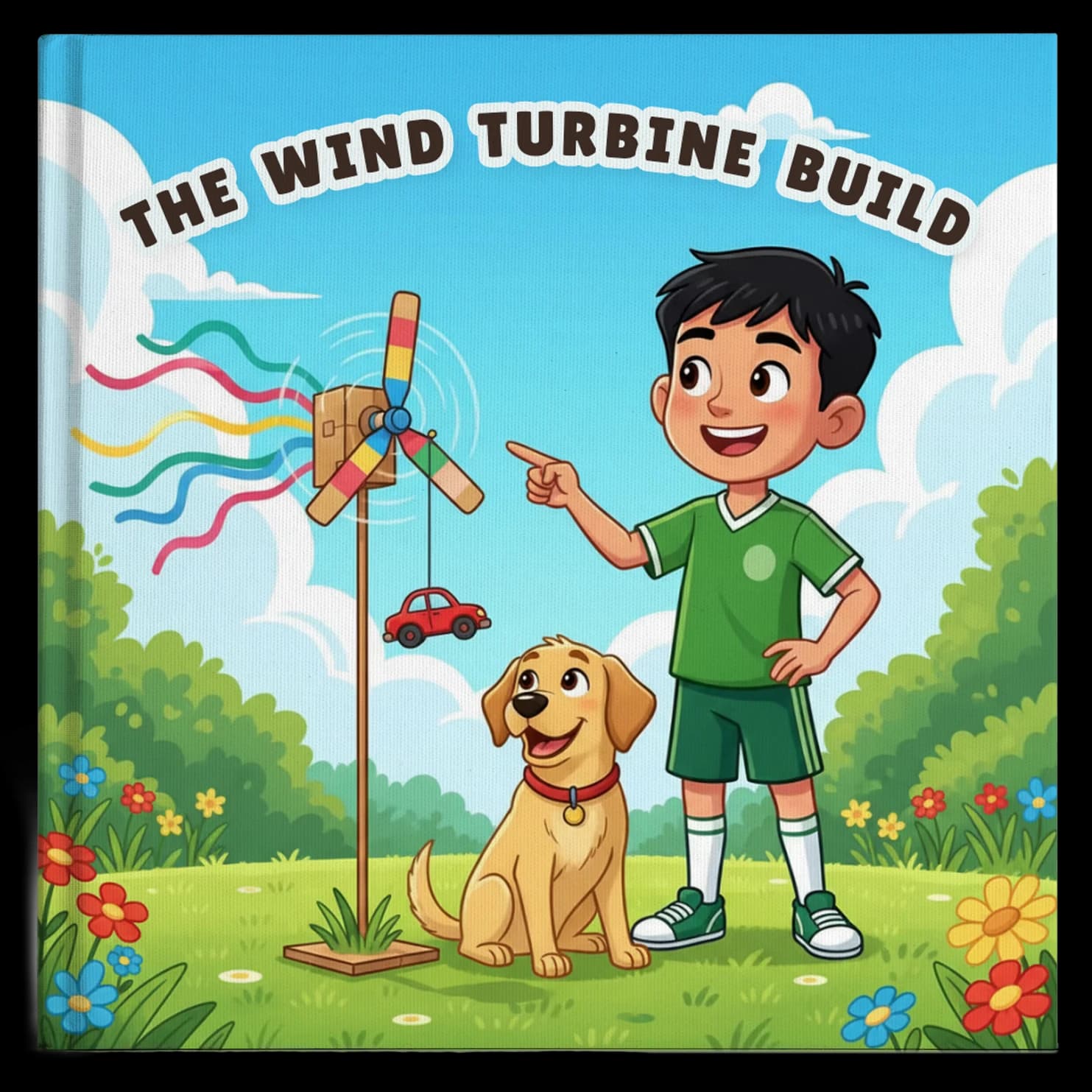
The Wind Turbine Build
Engineer a working wind turbine, learning about renewable energy, blade design, and how wind can do work.
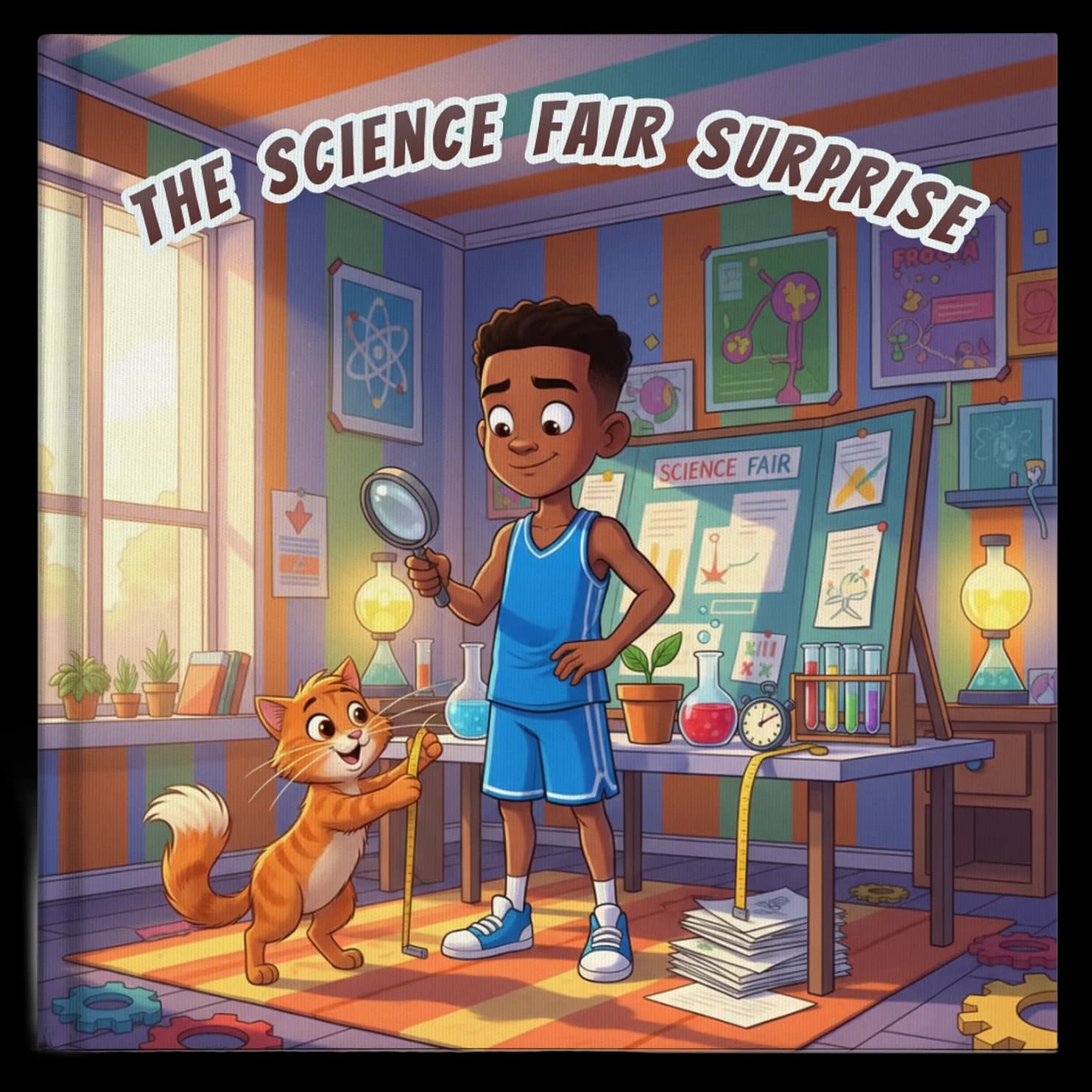
The Science Fair Surprise
Prepare an exciting science fair project that showcases creativity, experimentation, and clear scientific thinking.
Start Your Adventure
Ready to create your stem & science books?
Every story is personalized with your child's name, photo, and personality traits. Start for free and see your child as the hero of their own adventure.
Preview for free
Perfect for Every Age
Simple Science Discovery
Playful experiments with bubbles, magnets, and plants. Emphasis on observation, wonder, and hands-on exploration.
Science Exploration
Introduction to scientific method through volcano experiments, bridge building, and plant growth. Focus on prediction, testing, and learning from results.
Advanced STEM Projects
Complex engineering challenges, rocket launches, and science fair projects. Emphasis on design iteration, data recording, and communicating findings.
Have Questions?
Frequently Asked Questions
Can you keep experiments safe and kid-appropriate?
Absolutely! Safety is our top priority in every STEM-themed book. All experiments featured in Leo Books science stories use common household materials and involve activities that are completely safe for children when done with appropriate adult supervision. We avoid anything involving heat sources, sharp objects, toxic materials, or activities that could pose any risk to young children. The experiments shown—like mixing baking soda and vinegar, testing magnets, building with safe materials, growing plants, or making bubbles—are activities that parents and educators worldwide recognize as child-safe. Additionally, our stories naturally model safety awareness as part of scientific thinking, showing characters who consider safety, work in appropriate spaces, and involve adults when needed.
Can we make it more "story" and less "lesson" (or vice versa)?
Yes! This is one of the wonderful aspects of personalized books from Leo Books. During the creation process, you can adjust the balance between narrative storytelling and educational content to match your child's interests and your family's preferences. If your child loves stories and you want to inspire scientific thinking through an engaging plot, we can emphasize character development, adventure, challenges, and satisfying story arcs while weaving scientific concepts naturally into the background. Alternatively, if you have a child who's genuinely excited about learning how things work and wants more explicit educational content, we can include more detailed explanations, terminology, and step-by-step experimental processes while maintaining an engaging narrative structure.
Can siblings be lab partners?
Definitely! Including siblings as lab partners, research assistants, or fellow experimenters is a wonderful way to create a book that's meaningful for your whole family. When you create your book, you can add sibling names and characteristics, and they'll be woven into the science adventure as important collaborators who contribute their own ideas, observations, and problem-solving skills. This inclusion helps promote positive sibling relationships, shows the value of teamwork in science, and models how scientists often work collaboratively. Whether your children are conducting experiments together, comparing results, troubleshooting problems as a team, or celebrating discoveries side-by-side, seeing themselves as science partners creates shared reading experiences and can even inspire real-world collaborative experimenting.
Can the child be an inventor, scientist, or builder?
Yes, and you can choose the emphasis that resonates most with your child! During book creation, you can indicate whether your child sees themselves more as an inventor (creating new gadgets and solutions), a scientist (investigating questions and discovering how things work), or a builder/engineer (constructing and testing structures and machines). The story will adjust accordingly—an inventor-focused narrative emphasizes creativity and design, a scientist-focused story highlights observation and the scientific method, and a builder-focused tale celebrates hands-on construction and iteration. Of course, these roles often overlap in real STEM work, and our stories reflect that—a young scientist might also build experimental apparatus, an inventor tests hypotheses, and a builder observes what works and doesn't.
Can we avoid messy scenes for bedtime reading?
Absolutely! We understand that some stories work better for bedtime than others, and we can adjust accordingly. If you're creating a STEM book specifically for bedtime reading, let us know during the creation process. We'll focus the story on the thinking, planning, and discovery aspects of science rather than the active experimentation phase, or we'll set experiments in already-contained contexts. For instance, a story about designing an experiment can focus on the intellectual puzzle-solving and planning, or an observation-based science story (like watching plants grow or investigating magnets) can emphasize the calm, methodical aspects of scientific thinking. The pacing and vocabulary will be adjusted for winding down rather than ramping up excitement.
What age range are STEM stories appropriate for?
Leo Books STEM and science experiment stories can be customized for children from age 3 through 10, with content carefully adapted to each developmental stage. For preschoolers (3-4), stories feature simple cause-and-effect experiments, lots of visual observation, basic scientific vocabulary, and shorter text, often with rhyming patterns that make the content engaging and memorable. For kindergarten and early elementary ages (5-7), we introduce more structured experiments, the basic scientific method (predict, test, observe, conclude), simple measurement, and slightly more complex problem-solving. For older elementary children (8-10), stories can include multi-step experiments, more detailed scientific explanations, data recording, iterative design processes, and sophisticated vocabulary appropriate for developing readers.
How do you balance education with entertainment?
This balance is at the heart of what makes Leo Books STEM stories effective. We believe the best learning happens when children are so engaged in a story that they absorb concepts without feeling like they're being taught. Our approach weaves scientific thinking into compelling narratives where your child is the protagonist facing interesting challenges, making discoveries, and experiencing the satisfaction of solving problems. The scientific method isn't presented as a list to memorize—it unfolds naturally as your child's character wonders about something, tries different approaches, observes what happens, and figures things out. Experiments aren't demonstrations—they're plot points that move the story forward.
Do the stories show that failure is part of science?
Yes! This is one of the most important lessons woven throughout our STEM stories. Real science involves experiments that don't work, designs that need improvement, and results that surprise us—and we want children to understand that this is not only normal but valuable. In Leo Books STEM stories, your child's character typically encounters setbacks: a volcano that doesn't erupt, a bridge that collapses, a first rocket that doesn't fly well. Crucially, these moments aren't presented as failures to feel bad about, but as information to learn from. The stories show your child's character responding the way real scientists do—observing what happened, thinking about why, adjusting their approach, and trying again.
Ready to Begin?
Start Your Science Adventure Today
Transform your curious child into the scientist, inventor, or engineer of their own discovery adventure. Create a personalized STEM book that inspires real-world exploration.