What Age Is Best for Personalized Storybooks? Answered
Personalized storybooks work best when matched to a child’s developmental stage. Here’s a quick breakdown:
- Ages 1–3: Simple rhymes, bold visuals, and themes like bedtime or first milestones. These books help toddlers recognize themselves and build early language skills.
- Ages 3–5: Imaginative stories featuring adventures or social themes like sharing and making friends. They encourage creativity and emotional understanding.
- Ages 5–7: Longer stories with richer vocabulary and problem-solving themes. These books support independent reading and critical thinking.
Personalized books engage kids by making them the star of the story, which boosts reading interest, empathy, and language development. Choose books with age-appropriate text and relatable themes to create a meaningful reading experience.
Why Personalized Storybooks Work at Different Ages
Personalized storybooks tap into the “self-reference effect” - a psychological phenomenon where seeing their own name or photo makes a child feel more connected to the story. This connection helps kids retain information more effectively because the narrative feels personal. Instead of just observing a character’s journey, they experience it as their own. This unique quality makes personalized storybooks appealing across various age groups.
Children tend to reread personalized books 3 to 5 times more often than traditional ones. Why? Because the story feels like it’s about them. Unlike standard books where external rewards like stickers or praise might motivate reading, personalized books create genuine interest. When a child is the hero, solving problems or going on adventures, they’re not just reading - they’re actively participating in the story.
How Personalization Increases Reading Interest
Personalized elements do more than grab attention - they help children relate the story to their own lives. For toddlers, hearing their name in a rhyme makes it easier to focus. For preschoolers, seeing themselves in a story about learning to share makes the lesson feel directly relevant. These connections deepen their engagement and understanding.
Representation is another critical benefit. Many children, especially those of color, often don’t see themselves reflected in traditional children’s books. Researchers refer to this as a “zero image of oneself.” Personalized books address this gap by allowing kids to see characters who look like them, which can foster a positive sense of identity. Studies show that personalized storybooks lead to 40% higher engagement and encourage more frequent reading compared to generic books. This increased interest not only supports literacy but also nurtures emotional growth.
Building Emotional Skills and Imagination
When kids become the central character in a story, it does more than hold their attention - it helps them build emotional skills. Facing challenges and triumphs as the story’s hero allows them to practice empathy and emotional intelligence in a safe way. For instance, a story about starting daycare feels less intimidating when they are portrayed as the brave character. Similarly, a story about making friends helps them imagine how they might approach similar situations in real life.
Research shows that personalized storybooks can boost empathy by 82% and emotional intelligence by 35%. These books often model behaviors like sharing, teamwork, and resolving conflicts, all within scenarios that feel familiar to the child. Parents can amplify these benefits by asking reflective questions during reading, such as, “What do you think your character will do next?” This not only deepens emotional understanding but also helps kids process their own feelings. Additionally, these stories enhance language skills and critical thinking by introducing new ideas in relatable settings.
Developing Language and Thinking Skills
Personalized storybooks are also powerful tools for language development. By placing new words and phrases in meaningful contexts, these books make vocabulary easier to learn and remember. For example, a child introduced to the word “courage” might better understand its meaning when they see themselves acting courageously in the story.
Beyond vocabulary, personalized books often include foundational educational elements like name recognition, counting, and colors, which support early literacy and numeracy. When kids see themselves as the protagonist, reading becomes an active learning experience. This approach not only strengthens their understanding of grammar and sentence structure but also introduces them to problem-solving and moral reasoning. By tackling dilemmas within the story, children develop critical thinking skills that they can apply in real life.
| Developmental Area | Role of Personalized Storybooks | Impact/Benefit |
|---|---|---|
| Cognitive | Self-referential processing | Better memory and information retention |
| Language | Contextual learning of new words | Faster vocabulary growth and grammar understanding |
| Emotional | Safe emotional exploration | Improved empathy and emotional intelligence |
| Social | Modeling positive actions | Enhanced teamwork, sharing, and conflict resolution |
| Literacy | Recognition of name and likeness | Increased engagement and reading frequency |

Best Ages for Personalized Storybooks
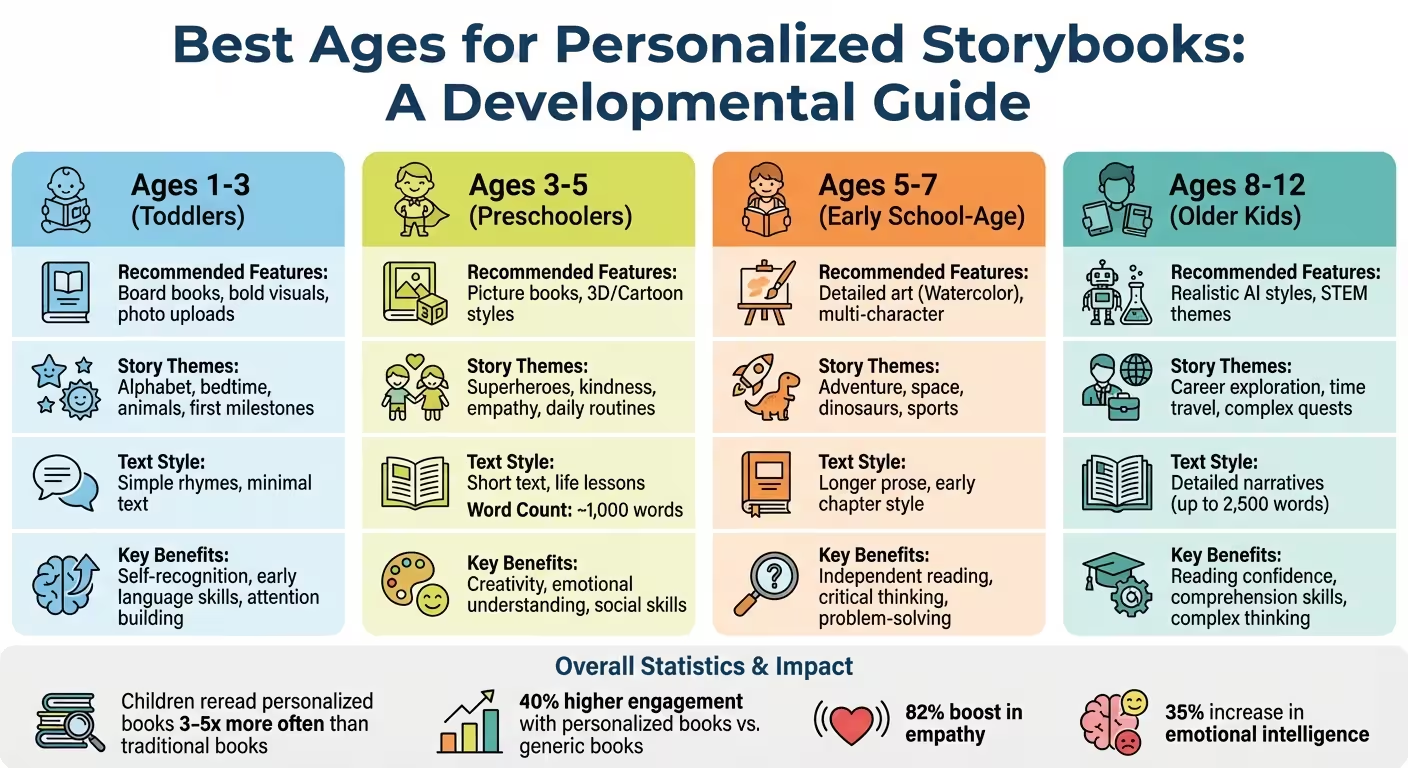
Choosing the right personalized storybook for your child can make a big difference in their developmental journey. Tailoring books to their age, interests, and abilities ensures that the stories resonate and support their growth.
Ages 1-3 (Toddlers)
For toddlers, the magic lies in repetition and familiarity. Personalized books that focus on everyday moments - like bedtime, mealtime, or playtime - work wonders at this stage. Hearing their name woven into simple, rhythmic text keeps their attention longer than a generic story might.
Books featuring photos of the child alongside family members or favorite toys add an extra layer of connection. Seeing their own face helps toddlers recognize themselves and builds self-awareness. Look for books that introduce basic concepts like colors, shapes, and numbers in a playful way. Simple rhymes and relatable scenarios make these books a delightful part of their daily routine.
Ages 3-5 (Preschoolers)
Preschoolers are ready to dive into more imaginative and adventurous stories. Whether they’re exploring a magical forest, traveling to space, or meeting underwater creatures, these personalized tales spark creativity and keep them engaged. The key is making the child the star of the story, which helps make abstract ideas more tangible.
At this age, kids also start to understand emotions and social dynamics. Stories that tackle themes like sharing, making friends, or dealing with disappointment can help them navigate real-life situations. Vibrant illustrations - whether whimsical watercolors or bold 3D designs - add to the experience, making storytelling feel like a creative adventure. These books serve as a bridge between simpler board books and the more complex chapter books they’ll encounter later.
Ages 5-7 (Early School-Age)
As children begin to read independently, personalized books can support this exciting milestone. Stories for this age group should gradually introduce longer prose, richer vocabulary, and more complex sentence structures. This progression helps build their reading confidence and comprehension skills without overwhelming them.
Themes also become more nuanced. Look for stories that feature problem-solving, STEM ideas, or career aspirations, like becoming a scientist or a veterinarian. Social-emotional topics, such as starting school or overcoming challenges, are equally valuable. Hardcover editions can make these books cherished keepsakes, marking this pivotal stage in their reading journey.
How to Pick the Right Personalized Storybook
Match Book Features to Your Child’s Age
Choosing the right storybook features can make storytime a magical experience for both you and your child. One key factor to consider is text complexity. For toddlers and preschoolers (ages 0-4), rhyming text helps develop phonological awareness, which is a critical building block for reading. As children grow, the ideal word count and narrative complexity increase. For example, kids aged 4-6 typically enjoy stories around 1,000 words, while those aged 5-9 are ready for richer, more detailed narratives closer to 2,500 words.
The system takes the guesswork out of this by automatically tailoring the vocabulary, sentence structure, and word count based on your child’s age. Here’s a quick guide to help you choose:
| Age Group | Recommended Features | Story Themes | Text Style |
|---|---|---|---|
| Toddlers (0-3) | Board books, bold visuals, photo uploads | Alphabet, bedtime, animals, first milestones | Simple rhymes, minimal text |
| Preschool (3-5) | Picture books, 3D/Cartoon styles | Superheroes, kindness, empathy, daily routines | Short text, life lessons |
| Early School (5-7) | Detailed art (Watercolor), multi-character | Adventure, space, dinosaurs, sports | Longer prose, early chapter style |
| Older Kids (8-12) | Realistic AI styles, STEM themes | Career exploration, time travel, complex quests | Detailed narratives (up to 2,500 words) |
This table ensures your chosen book aligns with your child’s developmental stage, keeping them engaged and excited about reading.
Themes add another layer of customization. With over 40 templates spanning categories like adventure, holidays, sports, careers, life events, and activities, there’s something for every interest. And if you don’t find the perfect fit, the custom story option allows you to create a completely unique narrative. For instance, Amanda W. from Nashville, TN, used this feature to include her children’s favorite toy robots, “Beep” and “Boop”, in a magical forest adventure.
After selecting the right features, use the preview tool to confirm every detail before finalizing your order.
Using Book Previews Before You Buy
Once you’ve narrowed down the features, the preview option makes it easy to double-check everything. With an instant 30-page preview, you can review the entire book to ensure the tone, text complexity, and illustrations match your child’s preferences.
The preview tool also lets you tweak individual pages. Adjust illustrations to better reflect your child, and catch any spelling mistakes in names, ages, or dedication messages before printing. This step ensures your personalized storybook is exactly what you envisioned, avoiding any surprises when it arrives.
Conclusion
Choosing the right personalized storybook means understanding your child’s developmental stage and matching it with their interests and abilities. For toddlers (ages 1–3), focus on books with simple rhymes, bold visuals, and sturdy hardcovers that can handle their curious hands. Preschoolers (ages 3–5) love imaginative tales where they can become the hero, often alongside their favorite animals or toys. Meanwhile, early school-age children (ages 5–7) benefit from stories with more complex themes, like STEM or leadership, and longer narratives that challenge their growing reading skills.
Seeing their name and likeness in a story creates a deep emotional connection that standard books just can’t replicate. Whether it’s capturing a family vacation, celebrating a special occasion, or building a bedtime tradition, these personalized books become cherished keepsakes that families treasure for years.
Leo Books makes creating these keepsakes effortless. With age-appropriate text complexity, 40+ customizable story templates covering everything from dinosaurs to dream careers, and a preview tool to tweak every detail, you can design a book that perfectly suits your child’s developmental stage. Add photos, choose an artistic style, and include a heartfelt dedication to craft a storybook your child will love.
Start designing your personalized storybook today and watch your child’s face light up as they see themselves at the heart of their own adventure.
FAQs
Can personalized storybooks help a reluctant reader?
Yes, personalized storybooks have the power to inspire even the most hesitant readers by placing them at the center of the story. When children see themselves as the hero, it creates a stronger connection to the narrative, making reading feel exciting and meaningful. This approach not only grabs their attention but also builds their confidence, turning reading into a fun, immersive experience that aligns with their interests and sparks their imagination.
How do I choose the right reading level for my child?
Finding the right reading level for your child is all about understanding their stage of development and literacy skills. Picking books that align with their abilities not only keeps them interested but also encourages their love for reading.
For younger children just starting out, simple board books with bright colors and minimal text are a great choice. These are easy to follow and help build basic recognition skills. As they grow and their reading skills improve, you can introduce books with more detailed stories that match their interests and comprehension level.
Paying attention to how they respond to different books can guide you in selecting stories that challenge them just enough without causing frustration. This approach helps make reading an enjoyable and rewarding experience while supporting their literacy journey.
Is adding my child’s photo better than using just their name?
Adding a photo of your child can create a deeper emotional connection, allowing them to see themselves as the central figure in their own story. This method often encourages greater confidence, emotional development, and involvement compared to simply using their name.