10 Benefits of Personalized Hero Narratives
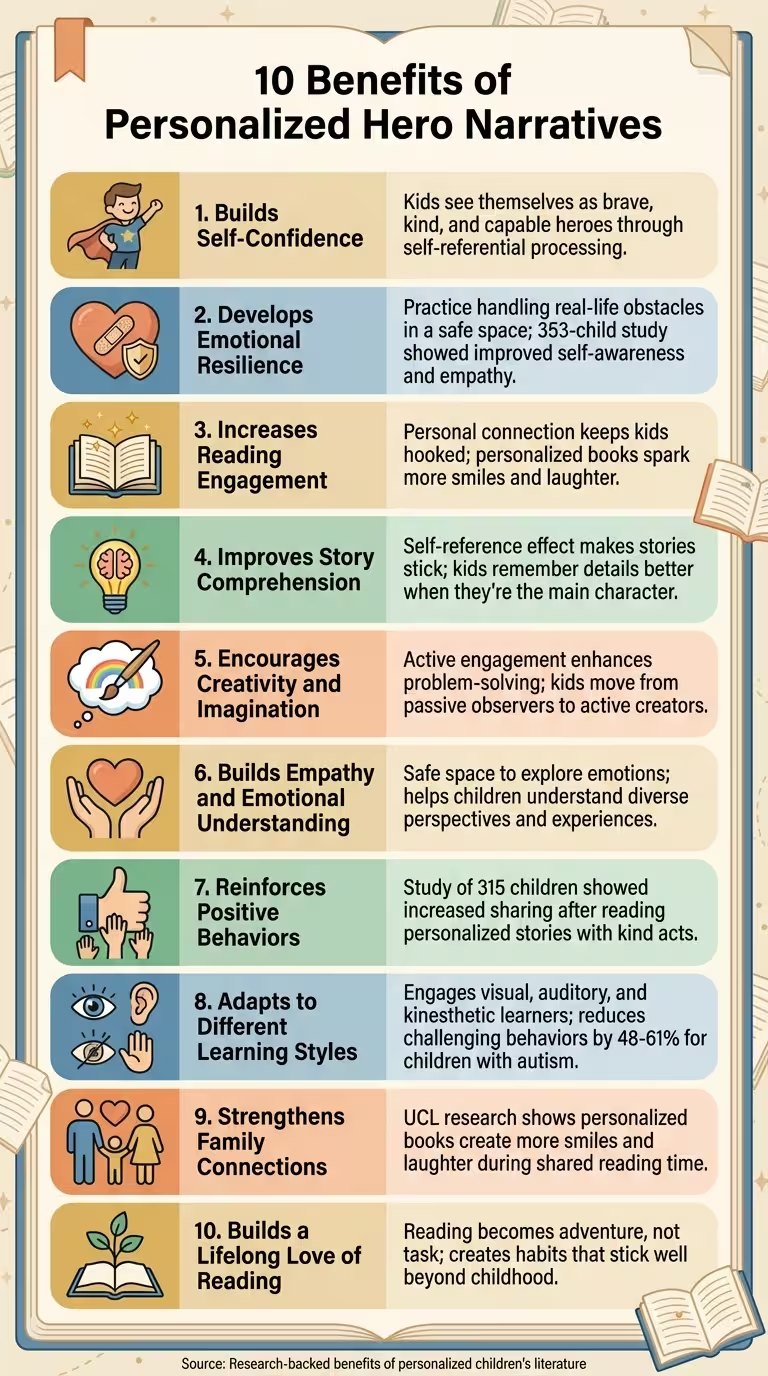
Personalized hero stories make kids the star of their own adventures, featuring their name, appearance, and even favorite companions. These stories aren’t just fun - they help children grow emotionally, boost confidence, and improve reading skills. Here’s a quick look at why they matter:
- Boosts Confidence: Kids see themselves as brave, kind, and capable heroes.
- Builds Emotional Skills: Stories help kids practice handling challenges and emotions.
- Encourages Reading: Personalization keeps kids engaged and excited to read.
- Improves Comprehension: Kids remember and understand stories better when they relate to them.
- Sparks Creativity: They imagine themselves in the story, enhancing problem-solving.
- Teaches Empathy: Kids connect with diverse characters and experiences.
- Reinforces Positive Habits: Stories encourage kindness, teamwork, and perseverance.
- Supports Different Learning Styles: Visual, auditory, and hands-on learners all benefit.
- Strengthens Family Bonds: Shared storytime creates lasting memories.
- Inspires a Love for Reading: Kids enjoy books more when they’re part of the story.
Platforms like Leo Books take this further by using AI to create custom illustrations and storylines, making reading personal and engaging for every child.
1. Builds Self-Confidence
When kids see themselves as the hero of a story - complete with their name and face - it sparks something called self-referential processing. This makes the story stick in their memory. By imagining themselves with qualities like bravery or kindness, they begin to internalize those traits. Parents can take this further by asking thoughtful questions like, “How do you feel right now?” or “What would you do next?” These reflective moments encourage kids to think deeply about their actions and emotions, helping to boost their confidence over time [3][4].
Picking stories that align with what a child is currently navigating - like starting school, making friends, or dealing with new experiences - can amplify this effect. When kids see themselves overcoming familiar challenges in a story, it becomes a kind of mental practice for real life. Platforms that let kids customize their characters or even help shape the storyline make this process even more impactful, giving them a stronger sense of ownership and empowerment [3].

2. Develops Emotional Resilience
When kids see themselves overcoming challenges in stories, they practice handling real-life obstacles. These narratives serve as a safe space, helping them explore emotions like frustration, nervousness, or disappointment. Essentially, they create mental blueprints for resilience. Research backs this up.
A two-year study of 353 children found that personalized storytelling boosts self-awareness, empathy, and decision-making. It also activates the prefrontal cortex, improving emotional regulation [5].
“Storytelling provides children with a structured yet imaginative avenue to explore and comprehend their emotions from a safe distance.”
- Kate Markland, Former Physiotherapist and Author [5]
Tailoring stories to a child’s experiences makes this effect even stronger. For instance, a story about a fictional monster can help kids process their own fears [5]. For children aged 9–12, stories that simulate real-life situations have been shown to reduce anxiety risk factors [6].
Asking reflective questions like, “How did you feel when you faced that obstacle?” helps children connect the story to their own lives. Over time, these skills not only improve emotional resilience but also make reading more engaging.
3. Increases Reading Engagement
When kids see themselves as the hero of the story, reading transforms into an adventure. That personal connection keeps them hooked, making them eager to flip each page - whether they’re battling a dragon or cracking a tricky mystery.
And there’s research to back this up. Studies show that personalized books spark more smiles and laughter compared to their non-personalized counterparts, creating joyful moments for both kids and parents during storytime [7].
Seeing their own face in the illustrations or spotting a beloved pet in the story makes the experience even more special. This connection not only makes reading fun but also strengthens literacy skills. These memorable moments can pave the way for even more growth in their development.
4. Improves Story Comprehension
When kids see themselves as the main character, the story becomes more than just words on a page - it becomes their story. This connection doesn’t just make reading more fun; it helps them truly grasp the plot, remember important details, and understand what’s happening as they turn each page.
This phenomenon is tied to something called the self-reference effect. When information feels personal, the brain processes and stores it more effectively. In other words, a tale about “a brave child” transforms into a personal adventure, making abstract ideas feel more real. Kids naturally picture themselves in the story, which strengthens their ability to understand and remember what they’ve read.
Personalized stories also encourage mental rehearsal - a fancy way of saying kids imagine what they would do in the character’s shoes. As the plot unfolds, they actively think through challenges and decisions, sharpening their problem-solving skills. Instead of just listening or reading passively, they’re fully engaged, following every twist and turn with curiosity.
This approach doesn’t just improve problem-solving - it also boosts memory. For example, if the story is about “Emma solving a puzzle”, and the child is Emma, that moment sticks with them far more than if it were about a random character. They’re not just reading about someone else - they’re living the experience.
Another perk? Kids are much more likely to reread stories where they play the lead role. Each reread improves their fluency and helps them notice new details they might’ve missed the first time. Over time, their understanding of the story’s flow and sequence gets even stronger, making the entire reading experience more rewarding.
5. Encourages Creativity and Imagination
When a child steps into the role of the hero, they move from being a passive observer to an active creator. Personalized stories provide a framework, but they leave plenty of space for a child’s imagination to take the lead. Instead of simply following someone else’s adventure, children start visualizing their own, sparking creative thinking that goes well beyond the story itself. Research shows this active engagement enhances both creativity and problem-solving skills.
“Seeing themselves as protagonists in adventurous tales inspires creativity, crucial for cognitive development and problem-solving.” – Prim Stories [9]
These stories also help children develop cognitive flexibility - the ability to shift perspectives and imagine different scenarios. Interactive prompts like “What happens next?” encourage decision-making and critical thinking. Studies on sociodramatic play reveal that children who take on roles in pretend play perform better on tasks requiring executive functioning and self-control [8]. Some books even feature branching storylines with multiple endings, allowing kids to explore how their choices shape outcomes. This not only sharpens critical thinking but also keeps their imagination fully engaged.
The creativity doesn’t have to stop at the book’s last page. Parents can encourage kids to draw new scenes, act out sequels, or even create their own stories inspired by the book [8]. These activities turn a single story into an ongoing creative journey, helping children see themselves as storytellers in their own right.
6. Builds Empathy and Emotional Understanding
Personalized hero narratives do more than just entertain - they help children develop empathy by weaving their own experiences into the story. When kids see themselves as the hero, they actively experience emotions like excitement, worry, and even disappointment. These emotional journeys provide a safe space for children to explore and process feelings, creating a mental toolkit they can use in real-life situations.
These stories also encourage perspective-taking by introducing children to characters and settings that may differ from their own lives. Seeing their likeness in diverse scenarios helps bridge the gap between “self” and “other”, making it easier for them to understand and relate to others’ experiences. As Professor Natalia Kucirkova notes:
“Identification with characters who are dissimilar from the readers is the most valuable contribution of children’s storybooks to cognitive empathy” [10].
The benefits of these narratives aren’t just theoretical - they’re backed by research. Studies reveal that personalized storybooks can significantly enhance empathy and emotional intelligence in young readers. Improvements in behaviors like sharing and self-regulation highlight how these stories translate emotional understanding into everyday actions.
Parents can amplify these benefits by engaging their children during storytime. Simple questions like, “How do you think the character feels?” turn reading into an active exercise in emotional growth. This not only deepens the child’s connection to the story but also helps them build emotional regulation skills they’ll use throughout their lives.
7. Reinforces Positive Behaviors
When kids see themselves as heroes demonstrating kindness, persistence, or teamwork, they naturally begin to internalize those actions. This “mirror effect” makes it easier for them to absorb positive messages and adopt these traits in their daily lives. These behaviors often build on earlier gains in self-confidence and emotional strength, amplifying the story’s overall influence.
Research backs this up. In August 2025, Hüseyin Kotaman and Aslı Balcı studied 315 children aged 5 to 6, asking each child to pick half of 20 stickers after reading a personalized storybook. The children who read stories where they were the main character performing kind acts showed a noticeable increase in sharing their favorite stickers with an unfamiliar peer. This was in contrast to kids who read non-personalized or neutral stories. The study concluded that personalized picture books effectively encourage prosocial behavior in young children [11]. Just as these stories build self-confidence and empathy, they also help foster positive social habits.
Why does this work so well? When children see themselves making good choices in a story, they retain the moral lessons more effectively. Instead of observing a generic character being brave or helpful, they experience themselves navigating challenges and making thoughtful decisions. Their brains essentially “practice” these actions through the story, creating a mental guide they can use when similar situations arise in real life.
Parents can take advantage of this by selecting stories that emphasize the virtues they want to nurture. For instance, a story about sharing toys before a playdate or sticking with a tough puzzle can give kids a chance to “rehearse” these behaviors. These stories go beyond simple entertainment - they become tools for shaping character and building a strong sense of self.
8. Adapts to Different Learning Styles
Every child processes information in their own way - some learn best through visuals, others through sound, and some by doing. Personalized hero stories tap into these differences, offering multiple ways for kids to connect with the same adventure.
For visual learners, seeing themselves in colorful illustrations strengthens the bond between the story’s imagery and its message. Auditory learners benefit from hearing their name woven into the narrative when the story is read aloud, reinforcing key details. Meanwhile, kinesthetic learners thrive when they get hands-on, like choosing characters, settings, or artistic styles before the book is created. This personalized approach even extends to children with diverse needs.
It’s especially helpful for kids with special needs. For example, social stories designed for children with autism have been shown to reduce challenging behaviors by 48%–61% [12]. Some platforms even include tools like Proloquo2Go symbols, making it easier for children with speech difficulties to engage with and understand their personalized stories [12].
Parents can make this experience even more meaningful by involving their child in the creative process. Asking questions like, “How do you feel in this scene?” or letting them pick characters and settings deepens their connection to the story. This hands-on involvement ensures that each tale is not only engaging but also tailored to meet every child’s unique way of learning.
9. Strengthens Family Connections
Imagine a child stepping into the role of a hero, joined by a loving parent or grandparent in a personalized story. Suddenly, storytime transforms into a shared adventure, weaving together moments that bring family members closer.
Research from University College London highlights just how impactful this can be. When parents and toddlers read together, personalized books sparked noticeably more smiles and laughter compared to generic ones [7]. Interestingly, the study found that while children’s joy stemmed from the personalized content, parents’ smiles were often a response to their child’s happiness.
“It appeared that most of the children’s positive affect with the personalized books was in response to the content of those books, while the parents’ smiles occurred mostly in response to a smile or laugh from the child.” - Natalia Kucirkova, Researcher, UCL [7]
This research underscores how personalized stories create a ripple effect of joy, fostering moments that strengthen emotional connections within families.
Beyond the studies, everyday experiences echo these findings. Personalized stories make children feel cherished and seen, while also inviting other family members into the narrative. Whether it’s a birthday celebration, a milestone like Ramadan, or a simple everyday adventure, these stories become keepsakes that nurture trust and communication. Including multiple family members in the story not only adds depth to these connections but also amplifies the sense of belonging and value for the child. Over time, these shared moments build a strong foundation for positive interactions that last well into the future [1][2].
10. Builds a Lifelong Love of Reading
Personalized stories have a special way of turning reading into something kids genuinely enjoy, laying the groundwork for a lifelong passion.
When a child becomes the hero of their own story, reading stops feeling like a task and starts feeling like an adventure. They’re not just flipping through pages - they’re eager to see what happens next to “themselves.” This kind of excitement fuels a natural motivation to read, creating habits that stick well beyond childhood.
The difference between reading because you have to and reading because you want to is huge. Personalized books encourage kids to revisit their favorite stories again and again. With each reread, they’re not only improving their fluency but also building confidence and stamina - two key ingredients for making reading a lifelong habit.
For reluctant readers, personalized stories can be a game-changer. Traditional books might not catch their interest, but when the story revolves around their own world, it’s a whole different experience. They see themselves as capable readers, which helps break down resistance and opens the door to other books. Personalized books can act as a stepping stone - starting with stories that feature their name and interests, then gradually introducing non-personalized books that align with what they enjoy. Even small steps, like recognizing their name in print or describing illustrations, build their independence and confidence over time.
Reading proficiency by third grade is often linked to future academic success, but there’s something even more important: fostering a natural love for books. When kids see stories as a source of comfort, excitement, and discovery, that love for reading becomes part of who they are. Personalized books plant those seeds early, making sure they grow into a lifelong relationship with reading.
How Leo Books Delivers These Benefits
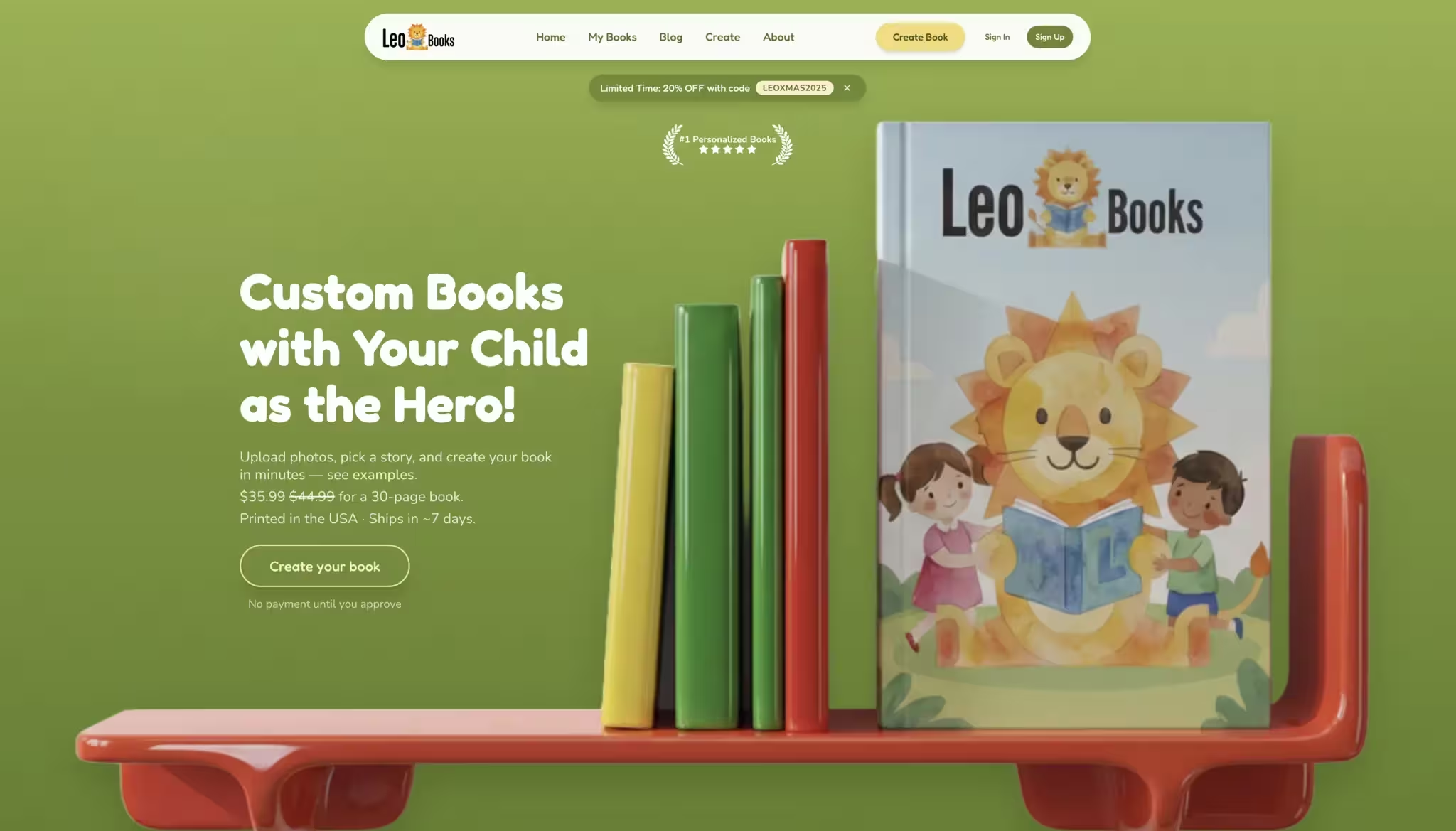
Leo Books turns your child into the star of their very own illustrated adventure. The process is simple: upload 10–15 photos of your child, and the platform uses AI-generated illustrations to create lifelike depictions of their face and personality across all 30 pages of the book. The result? A beautifully crafted 8 x 8 inch hardcover storybook that looks like it came straight off a bookstore shelf - except the hero is unmistakably your child. This level of personalization helps foster confidence, imagination, and excitement.
Taking personalization even further, Leo Books allows you to include favorite companions in the story. Whether it’s a treasured teddy bear, a family pet, or a toy robot, these beloved sidekicks can join the adventure. As Sarah T., a mom of twins, shared:
“My boys wanted their stuffed dinosaurs to be in the story with them. T-Rex and Spike go on space adventures with the twins at bedtime” [13].
This feature makes the story come alive by reflecting the child’s world, creating a connection that feels incredibly real.
Parents can also select from eight artistic styles - from soft, dreamy watercolors to bold 3D cartoon designs - and choose one of eight story themes like magical forests or space exploration. For a one-of-a-kind experience, the Custom Story option lets you suggest your own plot or recreate cherished family memories. Margaret H., a grandmother, used this feature to craft a book about a family vacation:
“Made a book about our family trip to Yellowstone with all three grandkids AND their golden retriever Max. They keep pointing at the pages saying ‘There’s Max chasing the butterflies!’ Absolute treasure” [13].
Before printing, you can preview every page as a digital flipbook. If something feels off, individual pages can be adjusted without impacting the rest of the book. To ensure top-notch quality, every book is reviewed by in-house artists for consistency before being printed. The hardcover books are produced in the USA and shipped within 7–10 business days, making it a seamless experience from start to finish.
Conclusion
Personalized hero narratives offer more than just entertainment - they help shape how children see themselves and interact with the world. By placing your child at the center of the story as a problem-solving protagonist, these books foster self-confidence, emotional growth, and a deeper love for reading. Plus, the self-reference effect boosts understanding and strengthens vocabulary, making the experience both enjoyable and educational.
These stories also create special moments for families. Reading together becomes a bonding experience, turning these books into cherished keepsakes. When kids see themselves overcoming challenges alongside a favorite pet or toy, they’re not just enjoying a story - they’re learning real-world problem-solving skills in a way that feels personal and relatable.
With Leo Books, crafting these one-of-a-kind stories is simple. Upload 10–15 photos, pick an artistic style, and review each page before your high-quality hardcover book is printed and shipped within 7–10 business days. The process is quick, yet the result is a custom storybook as unique as your child.
For an even more engaging experience, involve your child in picking the theme or artistic style. Adding a personal dedication can transform the book into a treasured family heirloom, creating memories that last a lifetime.
FAQs
How do personalized hero stories help improve a child’s reading skills?
Personalized hero stories can transform a child’s reading journey by making it more engaging and relatable. When kids see themselves as the hero of a story, it creates a deeper emotional connection, sparking their interest and encouraging them to spend more time reading. This added enthusiasm naturally supports the development of vocabulary, word recognition, and comprehension skills.
The personal tie to the story often leads to repeated readings, which helps reinforce literacy skills over time. Plus, imagining themselves in the narrative strengthens visualization and memory, building a strong base for early literacy while nurturing a genuine love for reading.
How do personalized stories help children build emotional resilience?
Personalized stories empower children by placing them at the center of their own adventures. When kids see themselves as the hero, it boosts their confidence and strengthens their belief in their ability to tackle challenges. This sense of ownership helps them approach obstacles as chances to learn and grow.
These stories also create a comforting space for kids to explore their emotions and work through tough situations. By imagining positive outcomes and overcoming hurdles in the story, they practice important skills like emotional regulation, optimism, and problem-solving - tools that help them handle life’s twists and turns with greater resilience.
How can parents make the most of personalized hero stories for their children?
Parents can make personalized hero stories even more impactful by getting actively involved in the storytelling process. Talking about the story with your child, asking open-ended questions like “What would you do in that situation?” or “How do you think the hero felt?” can spark meaningful conversations. These discussions not only strengthen emotional connections but also help reinforce the story’s lessons in a way that resonates with your child’s real-life experiences.
To make the experience even more engaging, try weaving in creative activities. You could draw scenes from the story together, act out favorite moments using costumes or props, or imagine entirely new adventures for the hero. Adding personal elements - like tweaking characters to look like your child, or including their beloved toys or pets in the story - can make the narrative feel extra special. These touches can boost your child’s confidence and make them feel more connected to the story.
By staying involved and encouraging creativity, parents can transform personalized hero stories into a fun and powerful way to nurture learning, emotional development, and family bonding.