7 Benefits of Making Your Child the Story Hero
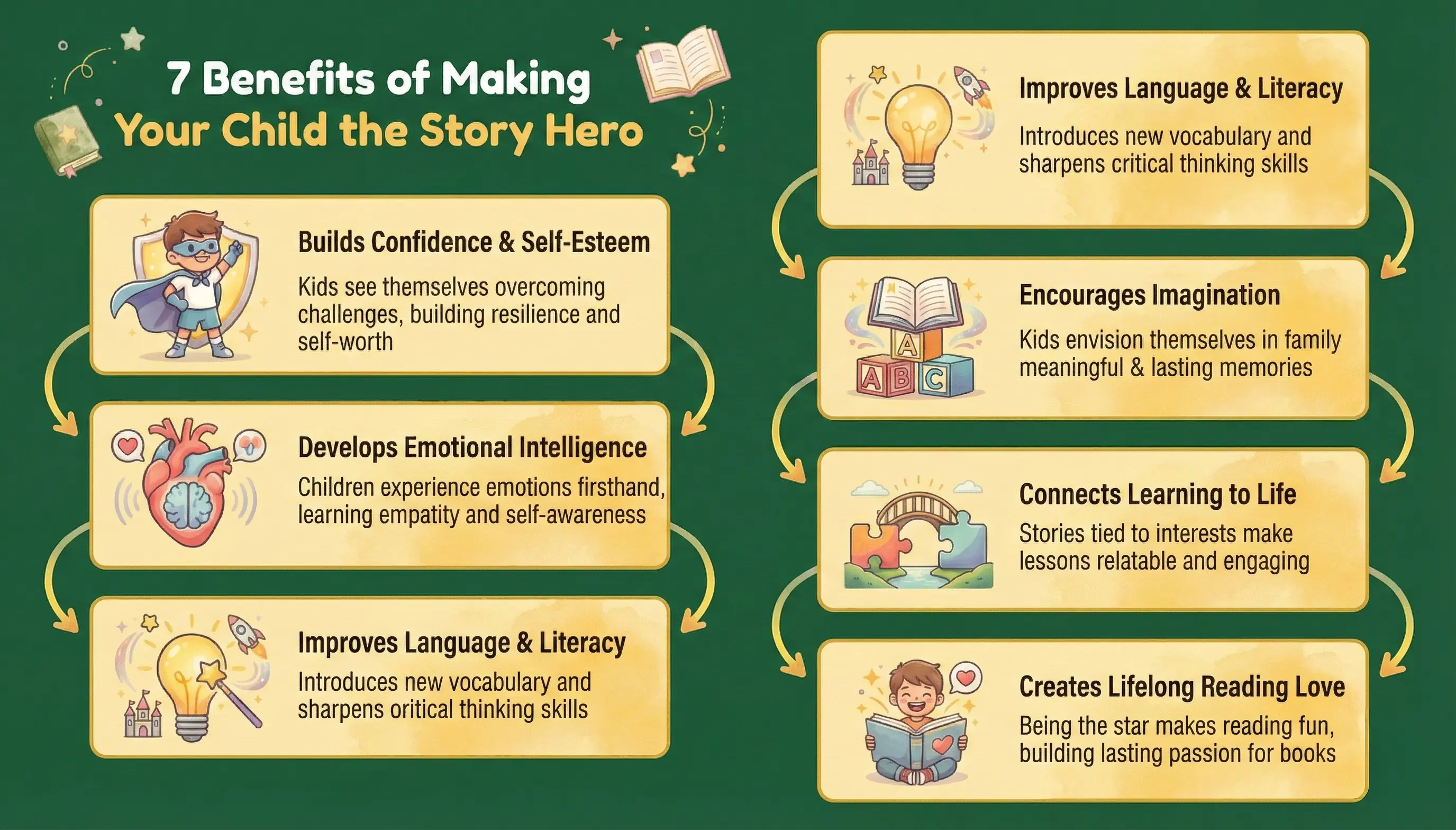
Personalized storytelling turns your child into the hero of their own adventures, helping them grow in ways that traditional stories can’t. By weaving their name, traits, and interests into the narrative, you create a deeply engaging experience that strengthens their confidence, emotional understanding, and love for reading. Here’s a quick look at why this approach matters:
- Boosts Confidence: Kids see themselves overcoming challenges, which builds self-esteem and resilience.
- Develops Emotional Skills: Experiencing emotions firsthand in stories helps children understand and empathize with others.
- Improves Literacy: Personalized tales introduce new vocabulary and sharpen thinking skills.
- Sparks Creativity: Kids imagine themselves in exciting roles, fueling their imagination.
- Strengthens Bonds: Sharing these stories creates meaningful family moments.
- Connects Learning to Life: Stories tied to their interests make lessons relatable.
- Encourages Lifelong Reading: Being the star makes reading fun and engaging.
Leo Books makes this easy with customizable storybooks that feature your child’s photo, name, and favorite themes, turning ordinary reading into unforgettable adventures.
How Can Storytelling Be Used To Develop Early Literacy Skills? - Childhood Education Zone
1. Builds Confidence and Self-Esteem
When your child becomes the hero of a story, something magical happens - they begin to see themselves as capable and strong. Instead of passively watching someone else tackle challenges, they imagine themselves making bold choices, solving problems, and emerging victorious. This subtle shift from being an observer to an active participant can have a profound effect on how they view themselves. And it’s not just imagination - research backs this up.
Studies from Boston College show that framing life as a hero’s journey can boost confidence, improve well-being, and sharpen problem-solving skills. When kids face fictional challenges - like outwitting a dragon or cracking a tricky puzzle - it helps them build resilience for real-life situations. For example, a study on superhero stories involving children in foster care found noticeable reductions in anxiety, aggressive behavior, and violent tendencies. Even better, these positive changes lasted over time. The children also reported clearer future goals and fewer unrealistic fantasies about their home life [7][9][11].
“Finally, diverse characters that look like my children. They see themselves as the heroes they are.” - Aisha K., Mom of 2 [5]
Finishing a hero story also leaves kids with a genuine sense of accomplishment. They’ve seen themselves succeed, and that success translates into pride in their own abilities. Whether it’s your encouraging words during storytime or their own growing self-awareness, this feedback loop strengthens their confidence even further [8].
2. Develops Emotional Intelligence and Empathy
When your child becomes the star of their own story, they don’t just read about emotions - they actively feel them. This kind of engagement goes beyond what traditional stories can offer. Research shows that when children see themselves as the main character in a book, their brains actually process the character’s behaviors as if they were their own. This neurological connection helps “hardwire” empathy and emotional understanding, giving kids a deeper ability to connect with others in real life [12]. It’s like a safe rehearsal space for navigating feelings.
Personalized stories also create a supportive environment for exploring tricky emotions [8]. Instead of being told how to react, kids see themselves working through challenges, handling setbacks, and finding solutions. This kind of hands-on emotional practice is invaluable. For instance, if a story shows them resolving a disagreement with a friend or overcoming disappointment, they’re more likely to use those same strategies when similar situations arise in the real world [4][7].
But the benefits don’t stop at self-awareness. By stepping into the role of the hero, children naturally begin to see the world from other perspectives [6][8]. They learn that even heroes have struggles - like the Hulk battling his anger or Elsa pulling away when she feels overwhelmed - and that these imperfections are part of being human. This understanding fosters both self-acceptance and compassion for others [7].
Parents can take this a step further by encouraging activities like writing their own stories, keeping emotion journals, or even writing letters to express their feelings [8]. These creative outlets turn storytelling into a lifelong tool for emotional growth, helping kids put their feelings into words and better understand the emotions of those around them.
3. Improves Language, Literacy, and Thinking Skills
Personalized storytelling sparks a child’s imagination in ways that few other activities can. Research from Fukushima Medical University reveals that storytelling without heavy visuals encourages kids to actively visualize and anticipate plot developments. This kind of mental exercise keeps the brain’s prefrontal areas engaged, even after the story becomes familiar [10]. It’s a level of cognitive stimulation that traditional picture books often struggle to match, setting the stage for stronger language and literacy skills.
Parents like Patricia A. and James F. have noted how these personalized tales improve communication and reading comprehension. By immersing children in unique adventures, these stories naturally introduce new vocabulary as kids work through challenges in the narrative [5].
Beyond language, these stories also nurture critical thinking. When children see themselves tackling tricky situations, they sharpen memory and sequencing skills by tracking plot details, understanding cause-and-effect relationships, and predicting what might happen next [13]. To amplify this benefit, try pausing during the story to ask questions like, “What do you think will happen now?” or “Why do you think that character made that choice?” This transforms listening into an active learning experience [13][14].
For bilingual families, personalized stories bring an added bonus. Carlos G., a father of two, discovered that creating stories in multiple languages helped his kids strengthen their skills in both languages [5].
4. Encourages Imagination and Creative Thinking
When your child steps into the role of the hero in their own story, they start to think beyond the boundaries of their daily routines. Unlike traditional picture books, personalized stories invite your child to imagine scenes and anticipate plot twists, engaging their mind on a deeper level [10]. This type of mental involvement is a stepping stone to even greater creative exploration.
These stories do more than entertain - they inspire children to see themselves as brave heroes, daring explorers, or wise wizards [8][16]. By envisioning these roles, kids not only stretch their imagination but also build confidence in their ability to tackle challenges.
A great example comes from Emma W., a mother who shared her experience:
“My shy daughter has started making up her own stories during the day. This sparked her creativity!” [5]
Through personalized storytelling, children begin to take ownership of their narratives. They invent characters, dream up new worlds, and practice solving problems in imaginative ways [15].
Want to nurture this creative spark at home? Try simple activities like asking your child to rewrite the ending of a favorite story or create a superhero complete with special powers and a backstory [8]. Encourage them to describe an imaginary place - maybe a magical forest or an underwater city - using detailed, vivid language. These exercises not only stimulate their imagination but also help them develop practical creative thinking skills, paving the way for future storytelling adventures.

5. Strengthens Parent-Child Relationships
Reading personalized stories together creates a special bond, encouraging open communication and building trust within your family [3][14]. When kids see themselves as the stars of the story - especially alongside parents or grandparents - it reinforces their sense of belonging and highlights their importance in the family. These moments often become cherished memories [4].
Personalized storytelling also doubles as a collaborative family activity. Adding personal details or weaving in real-life anecdotes makes each storytime unique and strengthens family connections. Many families even consider their personalized books like this as keepsakes, preserving their shared history and stories for generations to come [1][17].
To make the most of these bonding opportunities, try incorporating personalized stories into your daily routine. Dedicate time for story sessions where you can discuss the plot, predict what might happen next, or inspire creativity through activities like drawing scenes or acting out characters. These shared experiences not only bring the family closer but also turn learning into an enjoyable part of everyday life[14].
6. Links Learning to Your Child’s Daily Life
When your child steps into the role of the hero in their own story, abstract ideas suddenly make sense. Imagine a story featuring a character who shares your child’s name, interests, or challenges - this kind of connection goes beyond what any textbook can offer [4].
These tailored stories make learning feel effortless and relatable. For instance, if your daughter loves soccer, a story about a hero who learns the value of teamwork by passing the ball can resonate deeply. Or, if your son feels uneasy about the dark, a nighttime adventure featuring a brave protagonist can inspire courage [7]. These links to personal interests also open the door to weaving in family traditions.
Tying learning to family traditions adds another layer of meaning. Stories that highlight these traditions help children understand their roots and life lessons. For example, a story about a responsible character celebrating family customs during Eid can encourage positive behavior. Similarly, a tale set during Ramadan that reflects its rich practices can connect learning to real-life celebrations [4].
The lessons from these stories often translate into real-life actions. When children see themselves overcoming challenges in these narratives, they’re more likely to adopt problem-solving skills and use them at school, at home, or even on the playground [4].
7. Creates a Lifelong Love of Reading
When your child takes center stage as the hero of their story, reading becomes an adventure they can’t wait to dive into. This emotional connection to the narrative transforms reading from a task into something they genuinely enjoy. Instead of feeling like an obligation, picking up a book becomes an exciting choice.
There’s something truly special about personalized stories. Kids often revisit their own adventures, strengthening their connection to reading over time [15]. Each re-read feels like a fresh experience, deepening their attachment to the story.
This personal connection doesn’t just make reading enjoyable - it encourages independence. When children see themselves as the main character, their curiosity drives them to keep reading on their own. They’re not waiting for someone to push them; it’s the thrill of finding out what happens next that keeps them coming back to books.
By making reading personal and fun, this approach nurtures a lasting love for stories. Books become more than just words on a page - they turn into meaningful experiences your child will want to revisit time and time again.
Next, discover how Leo Books brings personalized storytelling to life and keeps that passion for reading burning bright.
How Leo Books Supports Personalized Storytelling
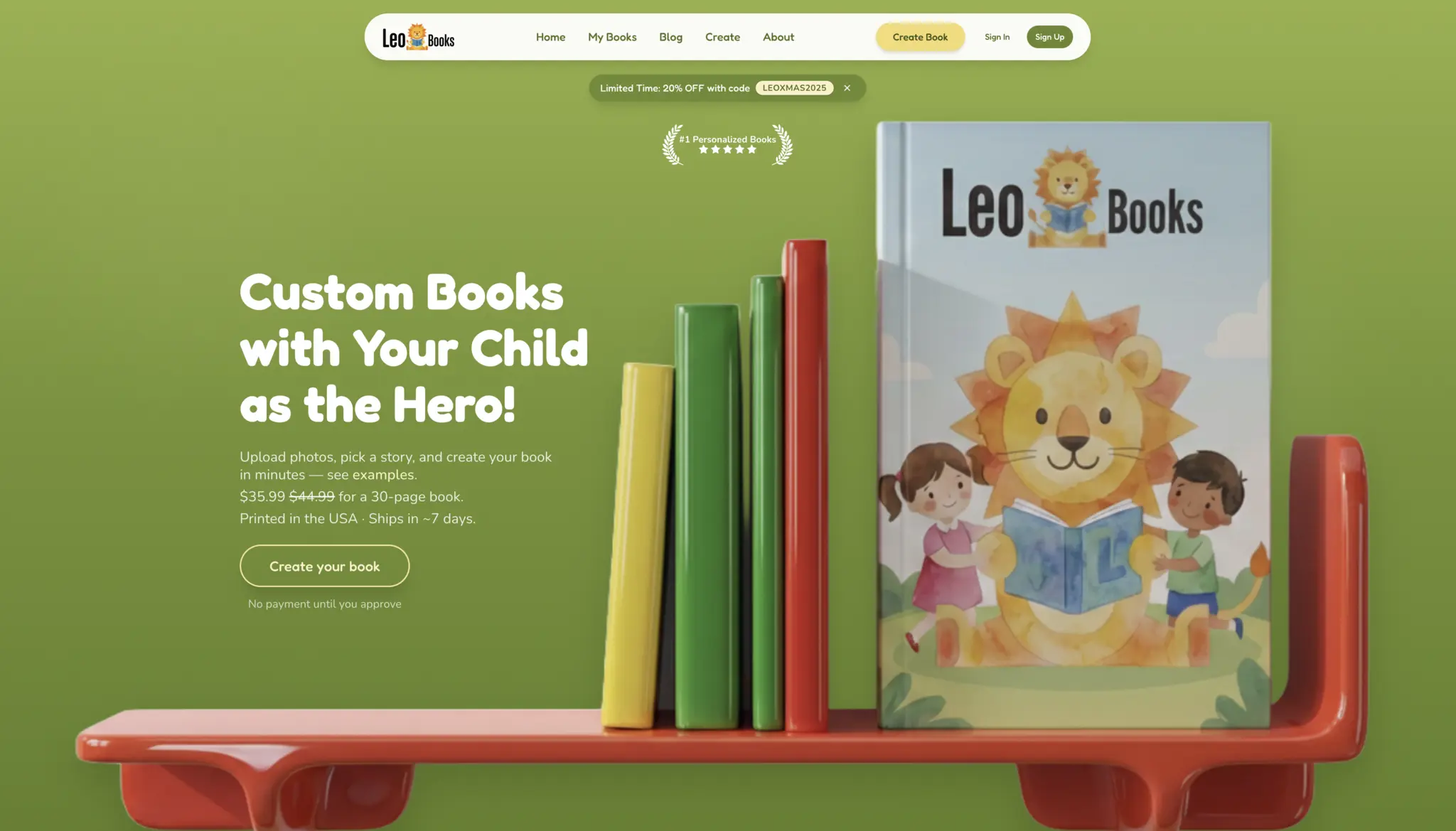
Leo Books takes the idea of personalized reading to the next level by offering practical features that make every story feel uniquely tailored to your child. One standout feature is the ability to upload your child’s photo, allowing you to customize the character’s appearance - everything from skin tone and hair type to clothing style. This personalization helps children see themselves in the story, fostering self-awareness and building confidence.
The platform also offers custom story themes that spark your child’s imagination. Whether they’re exploring the depths of space, diving into underwater worlds, or wandering through enchanted forests, these adventures immerse kids in magical, engaging narratives [17][3]. Research backs this up: A study published in the Early Childhood Education Journal in August 2025 found that children aged 5 to 6 who read personalized storybooks featuring their photo and name showed significantly greater improvements in sharing behavior compared to those reading non-personalized books [18].
Another thoughtful touch is the option for hardcover books. These not only ensure durability but also create cherished keepsakes that kids can revisit time and time again. Each re-read reinforces a love for reading while deepening their emotional connection to the stories[19].
Parents have noticed the impact of these personalized stories. As one parent, Mum Aamna, shared:
“Your stories always include a meaningful moral, making reading and learning more relatable as my child visualizes themselves as the main character.” [12]
Here’s how Leo Books’ unique features contribute to your child’s growth:
| Leo Books Feature | Developmental Advantage |
|---|---|
| Photo Uploads | Builds self-awareness, confidence, self-worth, and a positive self-image |
| Custom Story Themes | Sparks imagination and encourages creative thinking through adventurous scenarios [17][3] |
| Custom Story Themes | Enhances emotional intelligence and empathy by exploring diverse situations [17][3] |
| Hardcover Books | Provides lasting keepsakes that strengthen positive reading experiences over time[19] |
Conclusion
Personalized storytelling goes far beyond just keeping kids entertained - it plays a key role in their growth and development. When children see themselves as the hero in a story, it boosts their confidence, strengthens emotional understanding, and enhances literacy skills. These tailored adventures ignite their imagination, make learning feel relevant to their everyday experiences, and nurture a lifelong love for reading.
It also deepens the bond between you and your child. Sharing these stories creates opportunities for meaningful conversations, builds trust, and leaves you with cherished memories.
The numbers speak for themselves. Research shows that children who read personalized books can be up to three years ahead of their peers in reading age by the time they’re 14. Additionally, their reading comprehension scores can improve by an impressive 40% or more when they engage with stories that feature themselves [12]. These outcomes are life-changing.
Leo Books makes creating personalized stories easy. With simple photo uploads, customizable themes, and durable hardcover editions, these books deliver positive messages while becoming treasured keepsakes.
Turn reading into a magical journey - start crafting your child’s personalized story with Leo Books today.
FAQs
How does making my child the hero of a story help build their confidence?
Making your child the main character in a story can do wonders for their confidence. Seeing themselves as someone who can tackle challenges and succeed helps them feel capable and resilient. Each triumph in the story strengthens their self-image and builds up their self-esteem.
Beyond that, a personalized story makes them feel valued and special. When the narrative reflects their own experiences and interests, it creates a sense of belonging and importance. This connection can encourage them to face real-life situations with more bravery and a spark of creativity.
How does personalized storytelling help children develop empathy?
Personalized storytelling allows children to step into the shoes of the main character - often themselves - and navigate emotions and challenges from a first-person perspective. This immersive approach helps them grasp different feelings, viewpoints, and situations on a much deeper level.
When kids engage with stories that reflect their own experiences but also introduce diverse characters and scenarios, they naturally build emotional intelligence and social awareness. These tailored narratives break down complex emotions into something they can relate to, helping them connect more meaningfully with others and the world around them.
How do personalized storybooks help improve my child’s language and reading skills?
Personalized storybooks transform reading into an exciting adventure by making your child the star of the story. This unique approach naturally draws them in, encouraging a stronger interest in reading. And with that increased enthusiasm comes the chance to discover new words in a way that feels both meaningful and memorable.
Because these stories tie directly to your child’s own experiences, they also help improve comprehension. Language structures become easier to grasp, and the connection to real-life situations makes the learning process smoother. On top of that, personalized books invite active participation, sparking conversations that build early literacy skills - all while making reading a fun and rewarding experience.